How to seal and protect a stone surface
Most stone damage isn't wear — it's a wrong cleaner or a missed sealer. Both are easy to avoid.
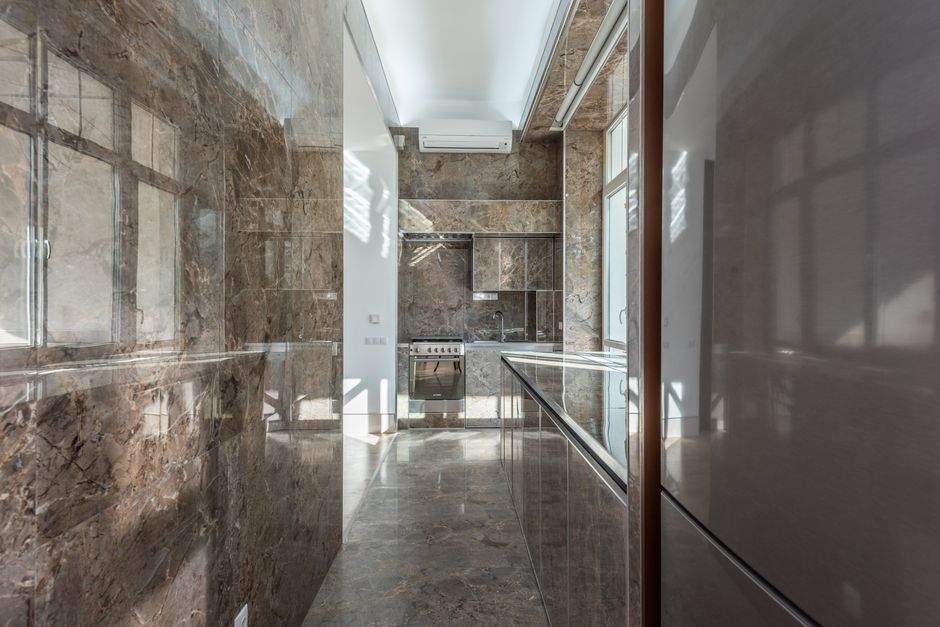
Almost every ruined stone surface we've been asked about failed for one of two reasons, and neither was the stone's fault. Either nobody sealed it, or somebody cleaned it with the wrong thing. Get those two right and natural stone is far less demanding than its reputation suggests.
Seal what's porous
Calcite stones drink liquids and stain from within. A penetrating sealer doesn't coat the surface — it soaks in and slows absorption, which buys you time to wipe a spill before it sets. It is not a force field. Reapply when water stops beading on the surface, which in a working kitchen usually means annually.
The acid rule
Lemon, vinegar, wine, tomato and many bathroom sprays etch calcite on contact — a dull mark no sealer prevents, because etching is a chemical reaction with the stone itself rather than a stain sitting on top of it. Neutral pH only, always. This is the single rule that matters most.
- Blot spills, don't wipe them across the surface.
- Use coasters under anything acidic, and a board under anything sharp.
- Test any new product on an offcut first — keep an offcut for exactly this.
- Skip "stone-safe" claims on supermarket sprays and check the pH instead.
Stain versus etch
Worth knowing the difference, because the fixes differ. A stain is something absorbed into the stone and is usually drawable with a poultice. An etch is surface damage to the stone's finish and needs polishing, not cleaning. People often scrub an etch harder and make it worse.
Everyday routine
Warm water, a soft cloth, and a pH-neutral stone cleaner when it needs more. That is genuinely the whole regime. Design choices can reduce the risk too — see using stone well.