Onyx vs marble: what actually separates them
They get grouped together and priced apart. The difference is in how they form and how they behave under a lamp and a knife.
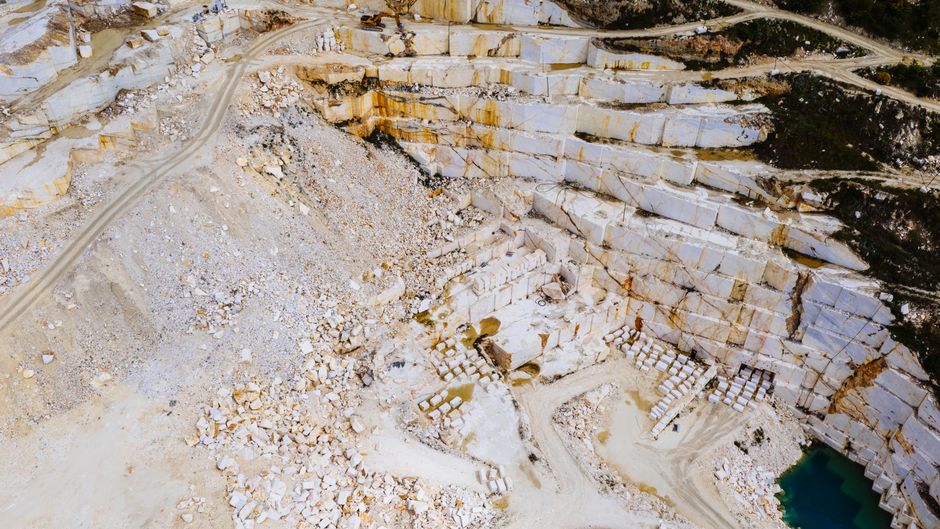
Ask three suppliers what separates onyx from marble and you may get three answers, two of them about price. The honest answer is geological, and it explains everything else — the translucence, the fragility, the cost and the places each one belongs.
Formation writes the character
Onyx is a banded calcite laid down slowly in caves and springs, mineral-rich water depositing layer on layer over a very long time. That layering is why it can be translucent enough to backlight, and why the banding runs in those distinct ribbons rather than scattered veins. Marble is limestone recrystallised under heat and pressure — denser, more uniform, more forgiving, and structurally a different proposition entirely.
What it means in a room
Onyx is jewellery: dramatic, delicate, best where it won't be scrubbed daily. Marble is architecture — it will take a kitchen, a floor, a stair. Match the stone to the wear, not just the look. The most expensive mistakes we see are onyx installed where it gets daily abuse, and the disappointment is entirely predictable.
The others worth knowing
- Quartzite — genuinely hard and acid-resistant, often mislabelled as marble in showrooms. The best choice for a working kitchen.
- Travertine — porous and pitted by nature; warm underfoot, but it wants filling and sealing.
- Granite — the workhorse. Less fashionable than it was, still hard to beat for durability.
- Soapstone — soft, non-porous, darkens with oil. Scratches easily and forgives just as easily.
Before you commit
See the actual slab, not a sample. Stone varies enormously within a single block, and the piece you approve is the piece you live with. Whichever you pick, read the care guide first.